Chemical characterization of indoor and outdoor PM at residences and schools, in Lisbon, Portugal

Title: Chemical characterization of indoor and outdoor PM at residences and schools, in Lisbon, Portugal
Summary: Diapouli E., Manousakas M.I., Almeida S.M., Martins V., Faria T., Vasilatou V., Eleftheriadis K.
Abstract:
Introduction | The detailed chemical composition of atmospheric particulate matter (PM) may provide insight into their emission sources and formation processes. On the other hand, while the mechanisms through which PM affect the human organism have not been fully explained, it has been recognised that particle size and chemical composition play a crucial role. In this framework, a comprehensive characterization of the ambient and indoor aerosol in micro-environments critical for children exposure (homes and schools) has been performed in Lisbon, Portugal. The obtained chemical composition database was used to assess the concentration levels of specific PM10 and PM2.5 components and the relative contribution of indoor and outdoor sources.
Methods | 40 residences and 5 schools were studied, covering areas of the city with different characteristics. Indoor and outdoor PM2.5 and PM2.5-10 samples were simultaneously collected on Quartz and Teflon or Nuclepore filters, using low volume reference samples. Each home or school was monitored for five consecutive days, during hours occupied by children. The Teflon/ Nuclepore filters were analysed by X-Ray Fluorescence and Electrothermal Atomic Absorption Spectroscopy for a total of 22 major and trace elements. The Quartz samples were analysed by the Thermo-Optical method (EUSAAR2 protocol) for the determination of organic (OC) and elemental carbon (EC).
Results & Conclusions | The observed concentration levels were typical of urban environments. Outdoor and home carbonaceous aerosol was mostly found in the fine particle fraction, while at schools, lower PM2.5/PM10 ratios were calculated, pointing towards a significant contribution from coarse particles, especially for OC (such as skin flakes, clothes fibres etc.). Indoor aerosol at homes was significantly enriched in carbonaceous components.
The ambient concentrations of soil and road dust related elements were elevated at the school sites in comparison to homes, suggesting higher contribution from road traffic at the areas where the schools are located. Indoor elemental concentrations were generally lower than the outdoor levels; nevertheless, indoor aerosol was enriched with smaller particles, due to their more effective penetration indoors. This result has significant implications for personal exposure and health impact assessment, since particles’ size greatly affects their transport and deposition in the respiratory tract and lungs (Zwozdziak et al., 2017).
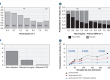
At homes, moderate correlation was observed between indoor and outdoor OC concentrations, suggesting that both indoor and outdoor sources affect indoor levels. No correlation was observed at schools, indicating the significant effect of children’s and teaching activities on the indoor OC levels (Pegas et al., 2012). A very good correlation was observed between indoor and outdoor EC concentrations, both at schools and homes, demonstrating the ambient origin of EC in indoor microenvironments (Fig. 1).
This work was supported by the EU LIFE Index-Air project (LIFE15 ENV/PT/000674). This work reflects only the authors’ view and EASME is not responsible for any use that may be made of the information it contains.
Pegas, P.N., et al. (2012) Atmos. Environ., 55, 80-89.
Zwozdziak, A, et al. (2017) J. Aerosol Sci., 103, 38-52.
Type of publication: Oral Abstract of EAC2019 (Gothenburg, Sweden, 25 – 30 August)
How to cite: Diapouli E., Manousakas M.I., Almeida S.M., Martins V., Faria T., Vasilatou V., Eleftheriadis K. (2019) Chemical characterization of indoor and outdoor PM at residences and schools, in Lisbon, Portugal. European Aerosol Conference – EAC 2019, Gothenburg, Sweden, 25 – 30 August.
How to download: here